
Tucson Water Damage Restoration Champions
Tucson's Most Trusted Water Damage Restoration Experts - Available 24/7
Rapid Response Within 30 Minutes to All Tucson Areas. Serving Downtown, University District, and Surrounding Neighborhoods in 85701-85745.
- Free inspection
- Direct insurance billing available
- IICRC-certified technicians
Get Started Today! Professional service with guaranteed results
About Tucson Water Damage Restoration Champions
Welcome to Tucson Water Damage Restoration Champions, your local experts in professional water damage repair and restoration. With over 15 years of experience serving the Tucson community, we know how water behaves in a desert house.
Our IICRC-certified technicians provide comprehensive water damage services including emergency extraction, structural drying, and mold remediation. We deal with your insurer directly, and pricing follows the actual scope of the job, whether that's a single extraction visit or a full rebuild.
Proudly serving all Tucson neighborhoods including Downtown, University of Arizona area, Sam Hughes, and Midtown. Our local office at 5420 E Broadway Blvd ensures rapid response times when water damage strikes.

Why Choose Tucson Water Damage Restoration Champions?
- 24/7 Emergency Response - On-site within 30 minutes anywhere in Tucson
- Local, Family-Owned Company with Deep Tucson Roots Since 2008
- Free Detailed Inspection & Direct Insurance Billing Available

Complete Water Damage Restoration Solutions
Twenty services, one crew: pick the problem you're dealing with below.
Water Damage Restoration
Full recovery after a leak or flood: extraction, drying, cleaning and repairs managed by one crew from the first call.
Learn moreWater Damage Assessment and Inspection
Moisture mapping with meters and thermal imaging to find where water travelled, what is still wet and what needs to come out.
Learn moreInsurance Claim Assistance for Water Damage Restoration
Photos, moisture logs and itemized scopes your adjuster can work with, plus help reading your policy before you file.
Learn moreEmergency Water Extraction Services
Truck-mounted and portable extraction to pull standing water out of carpet, tile and cavities before it spreads.
Learn moreStructural Drying Services
Dehumidifiers and air movers placed to a drying plan, with daily readings until framing and subfloors hit dry standard.
Learn moreMold Removal
Containment, HEPA filtration and removal of affected materials when moisture has already turned into mold growth.
Learn moreSewage Backup Cleanup
Toilet overflows, main line clogs and floor drain backups treated as Category 3 water, with containment, safe removal of soaked materials, disinfection and drying.
Learn moreBurst Pipe Water Damage Cleanup
Split copper, failed PEX fittings and cracked supply lines cleaned up fast, with extraction, wall and ceiling drying, and moisture logs your insurer can use.
Learn moreSlab Leak Water Damage Repair
Drying and flooring removal after a leak beneath the concrete foundation, with slab moisture testing so new tile, carpet or wood goes down on dry ground.
Learn moreWater Heater Leak Cleanup
Cleanup after a ruptured tank, leaking relief valve or failed tankless fitting, including closet, garage and attic drying with documented moisture readings.
Learn moreSwamp Cooler & AC Leak Water Damage
Ceiling stains under a rooftop cooler, overflowing AC drain pans and wet closets near air handlers, dried and documented with moisture readings.
Learn moreMonsoon Storm & Flood Damage Restoration
Storm runoff treated as contaminated water: mud removal, flood cuts, sanitizing and monitored drying for Tucson homes hit during monsoon season.
Learn moreRoof Leak & Ceiling Water Damage Repair
The inside of a roof leak: draining sagging ceilings, removing wet attic insulation, drying joists and repairing ceiling drywall after Tucson storms.
Learn moreWet Carpet & Pad Drying
Floating and drying wet carpet, replacing saturated pad, then cleaning and re-stretching, with honest save-or-replace advice based on the water source.
Learn moreHardwood Floor Water Damage & Drying
In-place hardwood drying with suction mats, readings compared against unaffected boards, and honest advice on when cupped floors can be refinished instead of replaced.
Learn moreDrywall Water Damage Repair
In-wall moisture testing, flood cuts above the wick line, cavity drying, then new board, tape, texture and primer matched to the surrounding wall.
Learn moreWater Damage Odor Removal & Sanitizing
Musty or sour smell after a leak? We locate the wet source, treat surfaces with antimicrobials and clean the air so rooms smell neutral again.
Learn moreContents Pack-Out & Restoration
Belongings in the way of drying? We box, label and photograph contents, clean salvageable items, and store them safely until rooms are ready again.
Learn moreCommercial Water Damage Restoration
Offices, retail, restaurants and multi-tenant buildings: we contain the wet zone, schedule work after hours, and keep owners, managers and tenants informed daily.
Learn moreWater Damage Reconstruction & Rebuild
The rebuild after drying: drywall, texture, paint, flooring, cabinets and trim, coordinated by one team with licensed trades and permits where required.
Learn moreThe Water Damage We See Most Often in Tucson
Water problems in a desert city rarely look like the flooded basements you see in movies. Here they start under a slab, inside a wall, above a ceiling, or at the base of a roof cooler. Below are the six kinds of losses that make up most of our calls, along with what each one tends to hide.
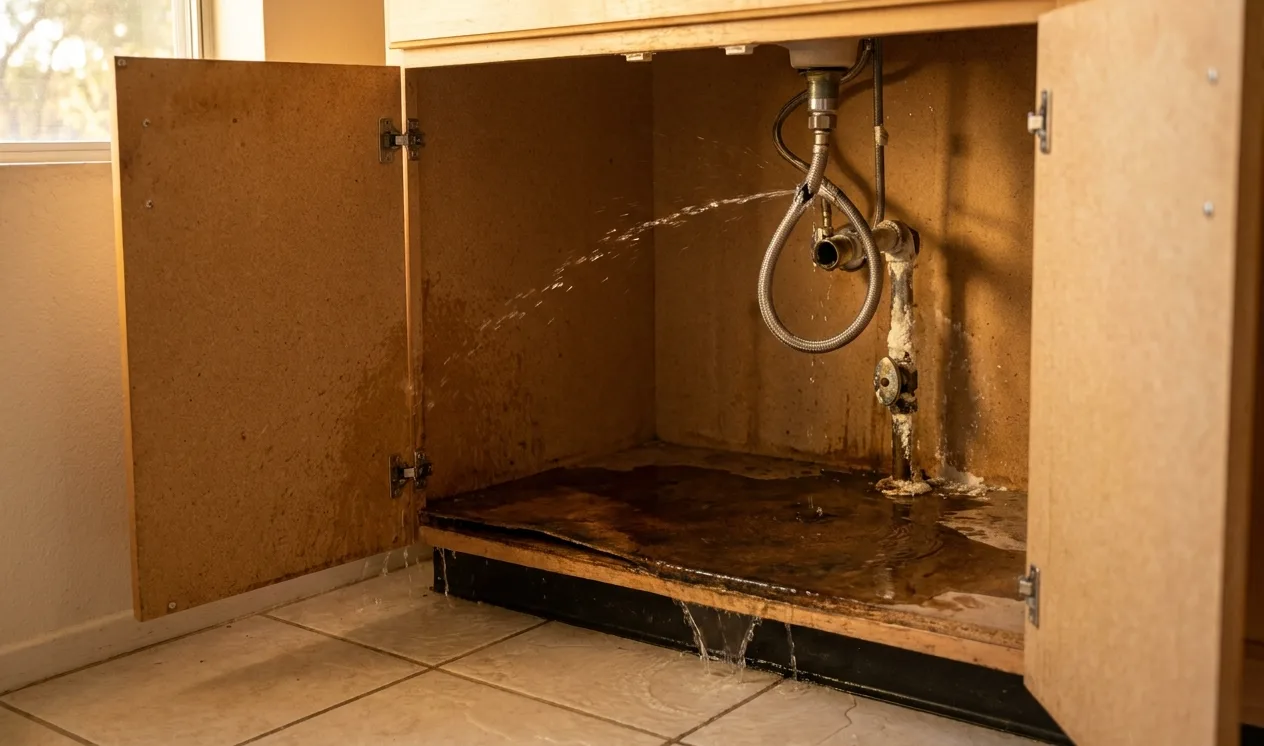
Burst and Split Supply Lines
A cracked braided connector under a sink or a split copper line in a wall can release several gallons a minute until someone finds the shutoff. Tucson's hard water leaves mineral scale inside fittings and valves, which wears seals and makes old shutoffs stick. We stop the flow, pull standing water, and trace how far it traveled under cabinets, baseboards and tile before anything gets torn out.
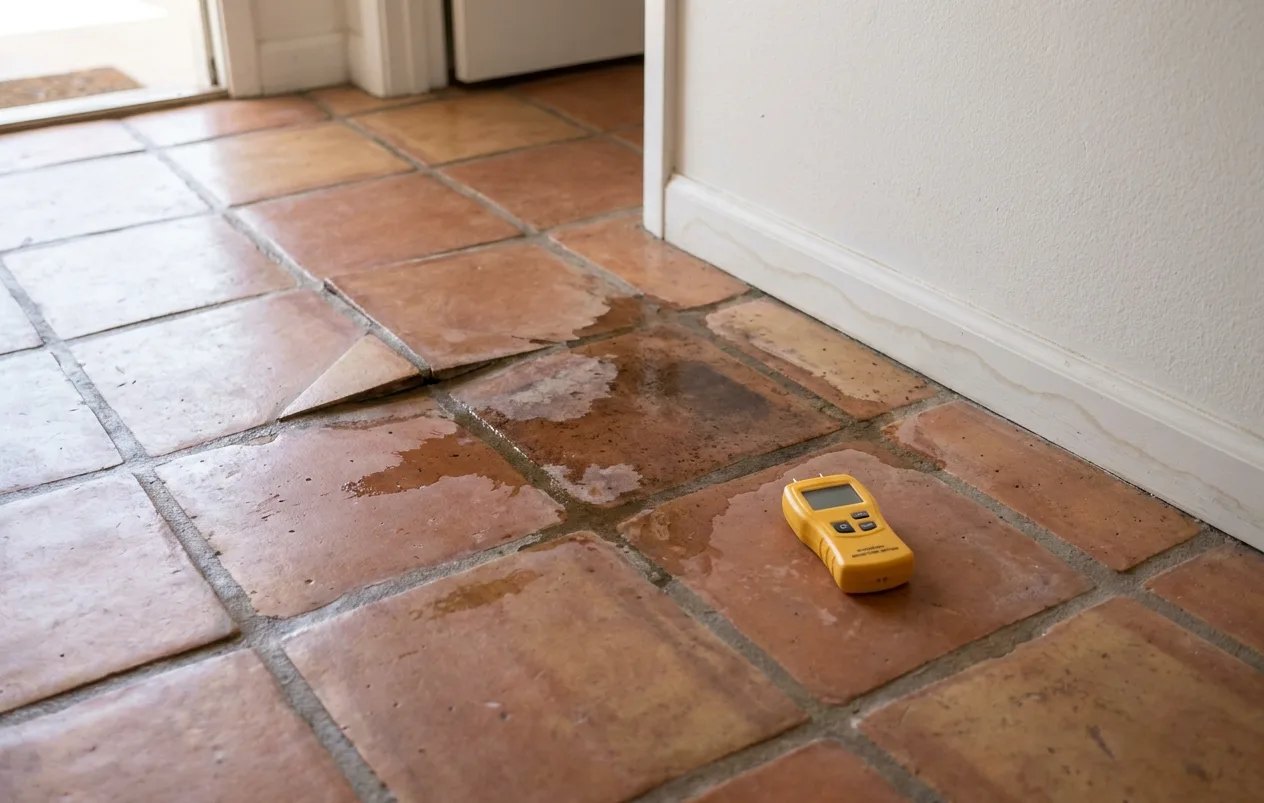
Slab Leaks
Most Tucson houses sit on a concrete slab with water lines running beneath or through it. When one of those lines fails, the first signs are often a warm spot on the floor, a running water meter, or flooring that lifts or cups. We map the moisture across the slab, protect what can be saved, and coordinate with your plumber so the repair and the drying happen in the right order.
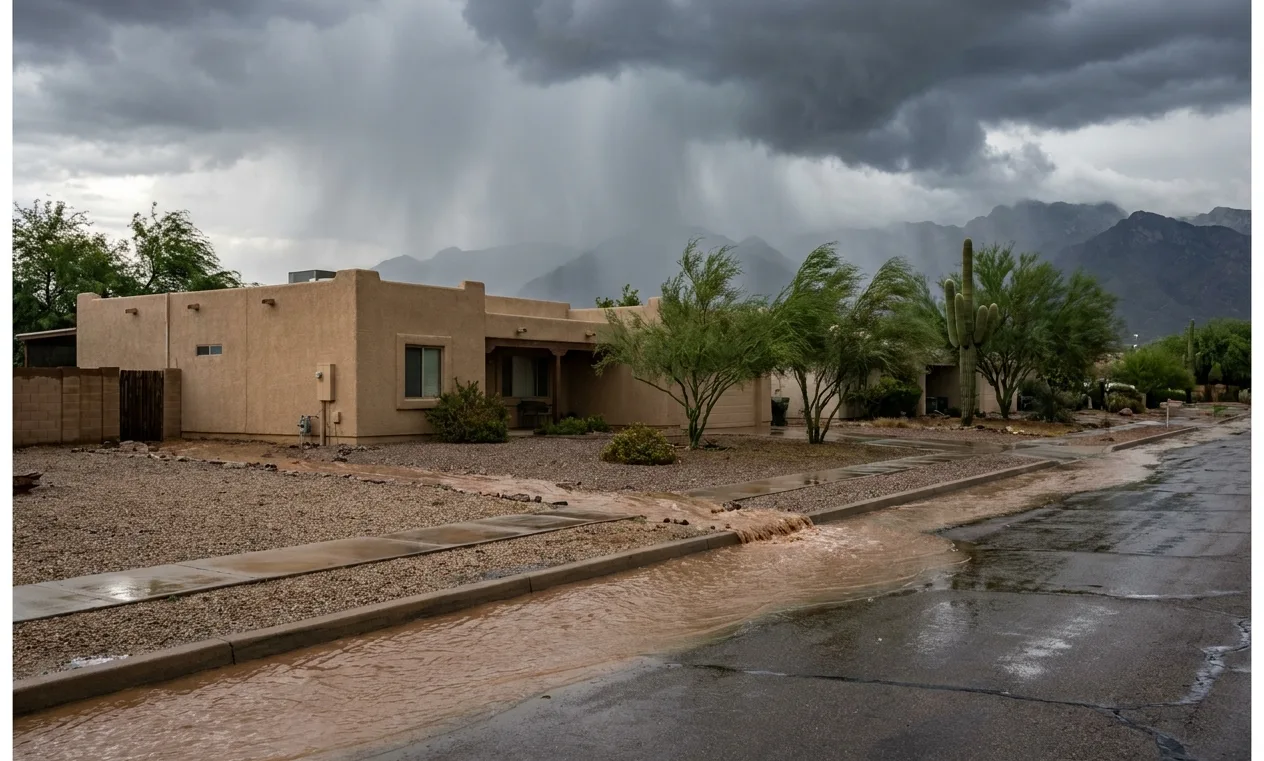
Monsoon Flooding and Wind-Driven Rain
The National Weather Service tracks Tucson's monsoon season through September 30. Short, heavy cells can overwhelm roof drains, push water under doors, and send muddy runoff into homes near washes. Floodwater that crosses the ground counts as contaminated, so these jobs call for removal of soaked porous materials, cleaning, and antimicrobial treatment along with drying.
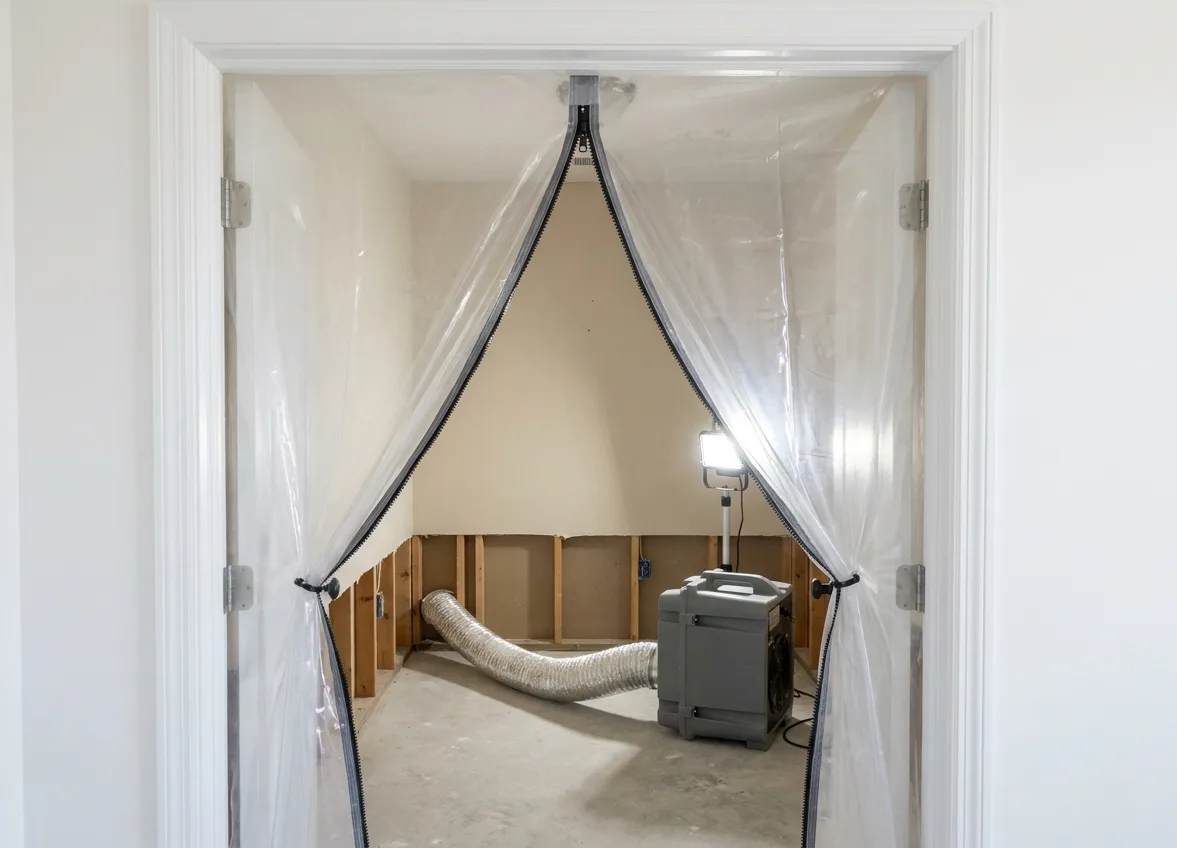
Sewage and Drain Backups
A blocked main line can push wastewater up through a tub, shower or floor drain in minutes. This is the most hazardous kind of water we handle. Our crew wears protective gear, sets up containment, removes affected carpet, pad and lower drywall, and disinfects every surface the water touched. We keep children and pets out of the area until cleaning is finished and the space has been checked.
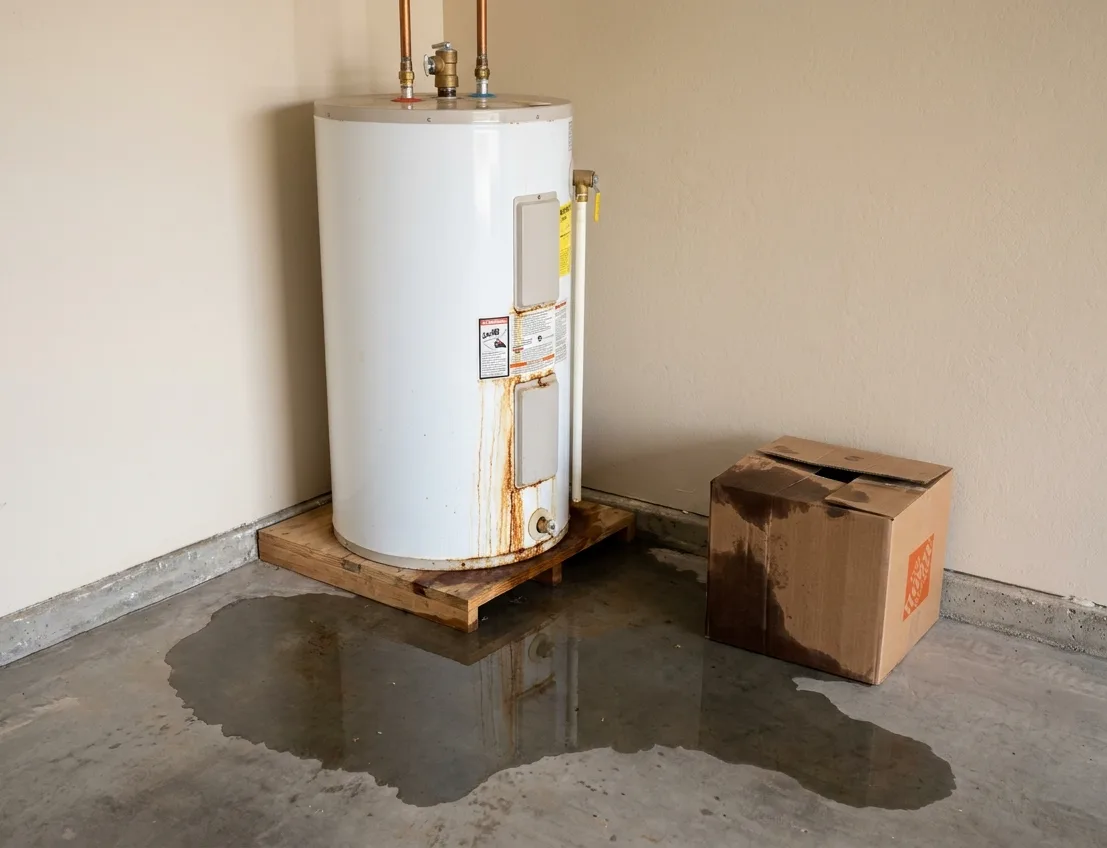
Water Heater and Appliance Failures
Tank water heaters in garages and closets eventually corrode through, and a failed tank can empty forty or fifty gallons onto the floor before anyone notices. Washing machine hoses, dishwasher lines and refrigerator ice-maker tubing are other repeat offenders. These leaks usually start as clean water, but they spread into adjacent rooms and wall bottoms quickly, so we measure well beyond the visible puddle.
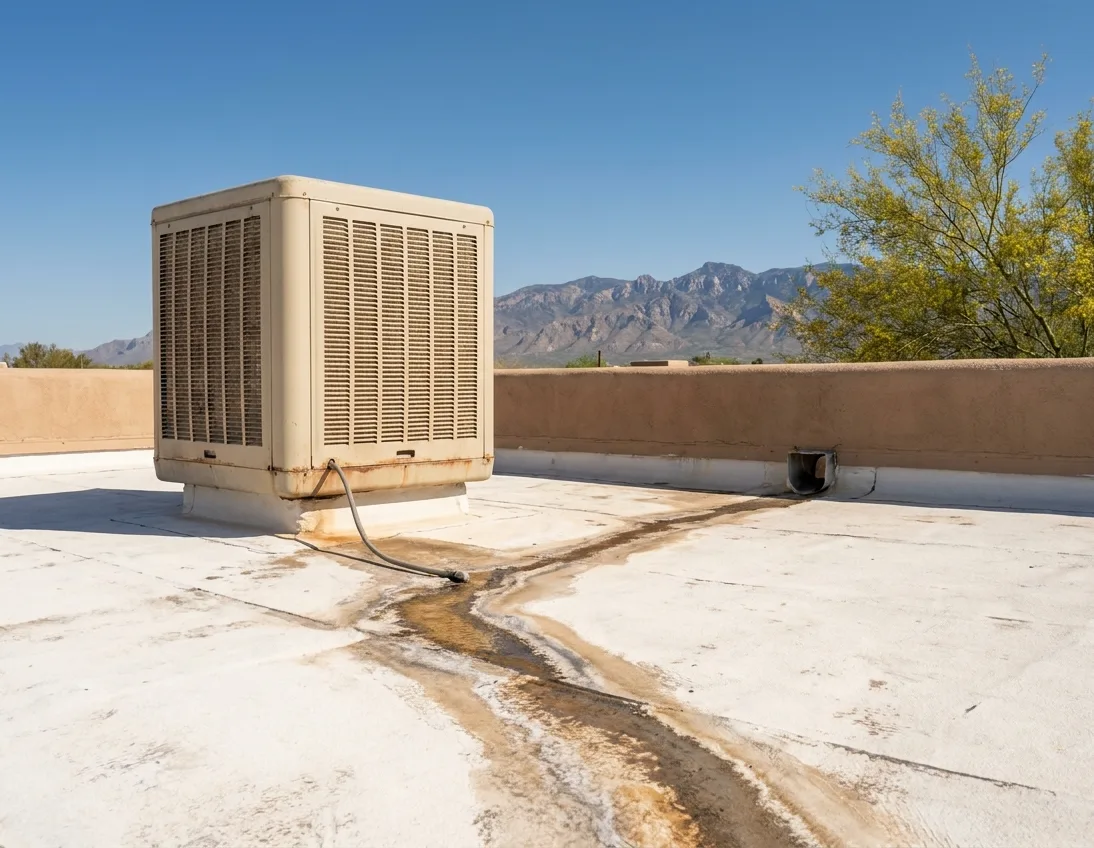
Roof, Parapet and Swamp Cooler Leaks
Flat and low-slope roofs with parapet walls depend on clear scuppers to shed rain. When debris blocks them, water ponds and finds its way through seams and penetrations. Evaporative coolers add another source: a stuck float valve or cracked pan can drip into ceiling drywall for weeks. We open stained ceilings selectively, dry the insulation and framing, and point out the roof issue you'll want fixed.
How We Classify the Water in Your Home
The IICRC S500 standard sorts water losses into three categories based on how contaminated the water is. The category decides what we can dry in place, what has to be removed, and what protective steps the crew takes. We name the category on the first visit and record why, so your adjuster sees the same reasoning we used.
Category 1: Clean Water
Water from a broken supply line, an overflowing sink fed by clean tap water, or a melted ice maker starts as Category 1. It poses little health risk at first, which means carpet, pad and drywall can often be dried rather than replaced. That window is short. As clean water sits, picks up dirt from flooring and warms up, it can degrade into the next category.
Category 2: Gray Water
Gray water carries enough contamination to make people sick if they drink it or have prolonged contact. Washing machine discharge, dishwasher overflow and toilet overflow with urine but no feces fall here. We usually remove carpet pad, clean affected surfaces with an appropriate disinfectant, and dry structural materials under tighter controls. Category 1 water that has been left for a day or two is often reclassified as Category 2.
Category 3: Black Water
Category 3 water is grossly contaminated. Sewage, toilet backflow containing feces, and floodwater that flowed across soil or streets into the house all qualify. Porous materials it reaches, such as carpet, pad, upholstered furniture and the lower section of drywall, generally have to go. Our crew works in protective equipment, isolates the area, and cleans and treats the structure before drying begins.
Hidden Problems We Look For Before Calling a Job Dry
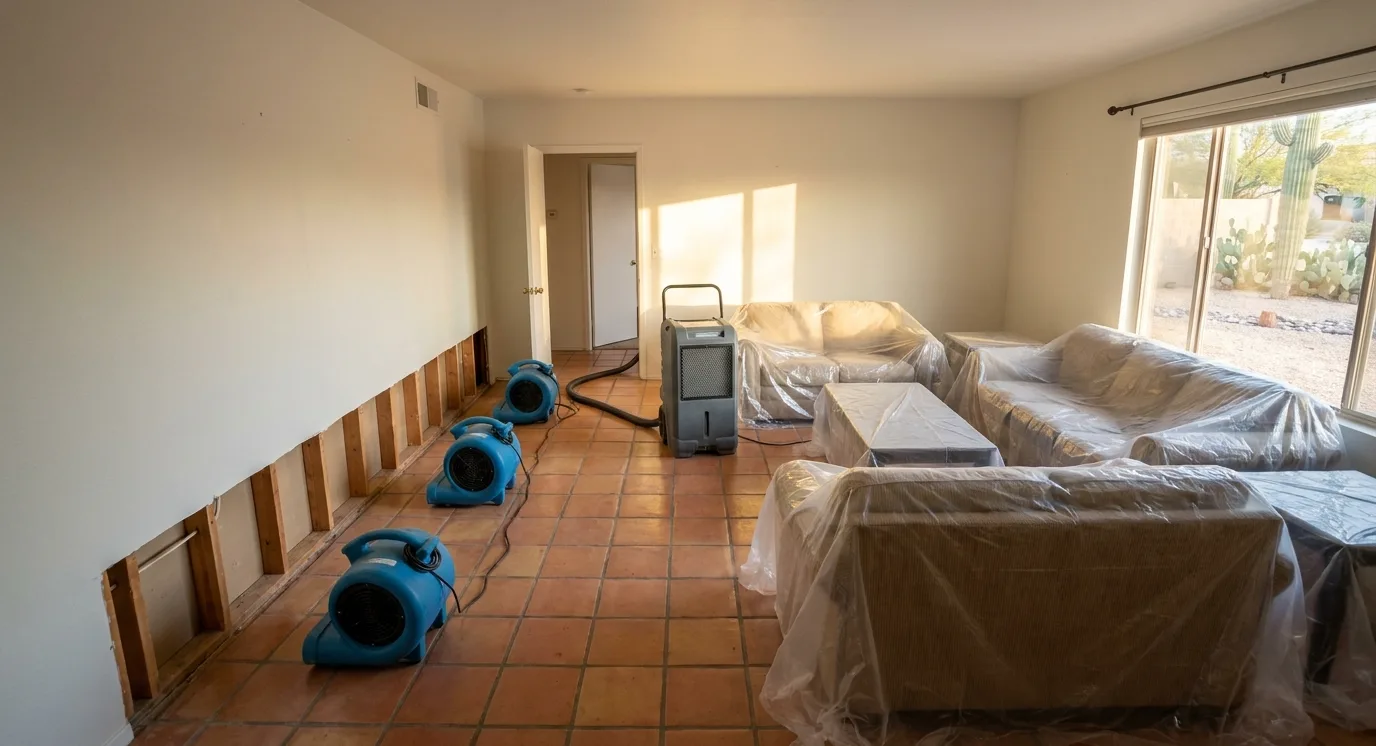
Wet Wall Cavities
Painted drywall can feel dry to the touch in a few hours of Tucson air while the back face, the bottom plate and the insulation stay soaked. We check with pin and pinless moisture meters and a thermal camera, then open small inspection holes or remove baseboards where readings stay high. Drying the cavity directly with targeted airflow saves you from mildew and swelling showing up months later.
Damp Subfloors and Slabs
Concrete holds water and releases it slowly. Tile, vinyl plank and laminate laid over a wet slab can trap that moisture and lose adhesion, while wood subfloors in raised sections or second stories can swell and cup. We take readings below the flooring, compare them with unaffected areas of the same house, and keep drying until the numbers match the dry baseline.
Early Mold Growth
Mold needs moisture, a food source like paper-faced drywall or wood, and time. A slow leak behind a vanity or above a ceiling supplies all three. When we find growth, we follow the IICRC S520 approach: contain the area, use HEPA filtration, remove affected materials, and clean the surrounding surfaces. Correcting the moisture source comes first, or the growth simply returns.
Lingering Odors
A musty or sour smell after a leak usually means something is still wet or contaminated, not that the room needs air freshener. Common sources are pad left under carpet, soaked tack strip, wet insulation, and debris in ductwork near the loss. We find and remove the source, clean the affected area, and use deodorizing methods matched to the material so the smell doesn't come back on the next warm day.
What Happens After You Call Us
Stop the Water and Make the Space Safe
We help you locate the main or fixture shutoff, check for electrical hazards around wet outlets and appliances, and identify the water category. Furniture gets lifted onto blocks or moved out of the wet area, and we photograph everything as we found it. Those first pictures matter for the insurance file, so we take them before anything is moved or discarded.
Extract Standing Water
Removing liquid water with truck-mounted or portable extractors is far faster than evaporating it. We work carpet, pad, tile grout lines and hard floors until no more water comes up. On Category 2 and 3 losses, we remove and bag unsalvageable materials at this stage so the structure underneath can be cleaned and dried properly.
Map Moisture and Set Drying Equipment
With a moisture map drawn, we place air movers to sweep the wet surfaces and low-grain refrigerant (LGR) or desiccant dehumidifiers to pull the evaporated water out of the air. Closed wall cavities may get injection drying through small holes. The layout follows the room's size, materials and drying class rather than a fixed number of machines.
Monitor Daily and Adjust
Each visit, we record readings from the same marked points along with temperature and humidity inside and outside the drying area. Psychrometric numbers tell us whether the dehumidifiers are keeping up or the airflow needs to move. Equipment comes out only when materials reach the dry standard we set from unaffected parts of your home.
Repair, Rebuild and Close Out
Once everything is dry, we replace removed drywall, baseboards, insulation and flooring, then texture and paint to blend with the rest of the room. You and your adjuster receive the moisture logs, photos and a line-item scope of the work. If a room still smells or looks off at the final walkthrough, we go back and address it.
What Water Damage Cleanup Costs in Tucson
Every loss is priced after we see it, but it helps to know the ranges most Tucson homeowners fall into. The figures below are typical bands, not quotes, and they cover the restoration work only. Plumbing or roofing repairs to fix the source are separate. Our moisture inspection is free.
The biggest price drivers are the water category, how many square feet got wet, how long the water sat before drying started, and how much material has to be removed and rebuilt. Sudden, accidental leaks are commonly covered by homeowners policies, while long-term seepage and outside floodwater often are not without separate coverage. We'll explain what we see and document it so your adjuster can decide.
| Service | Typical range |
|---|---|
| Moisture inspection and assessment | Free |
| Emergency water extraction | Starting at $500; most jobs $1,000–$4,500 |
| Structural drying (equipment and monitoring) | Most jobs $1,500–$6,000 |
| Full water damage restoration | Most homes $2,500–$10,000; major losses $15,000–$50,000+ |
| Burst pipe cleanup (plumbing repair not included) | Most jobs $1,500–$7,500 |
| Sewage backup cleanup | Most jobs $3,000–$12,000+ |
| Monsoon or flood cleanup | Most jobs $3,000–$15,000; severe losses $25,000+ |
| Mold removal | Starting at $1,500; most jobs $2,500–$7,500 |
Areas We Serve
Neighborhood pages with local housing notes and the water risks we see there
Downtown
Zip Code: 85701
Leak, flood and mold work in Downtown.
View areaUniversity of Arizona
Zip Code: 85721
Leak, flood and mold work in University of Arizona.
View areaArmory Park
Zip Code: 85701
Water damage help for Armory Park, day or night.
View areaBarrio Viejo
Zip Code: 85701
Water damage help for Barrio Viejo, day or night.
View areaBarrio Anita
Zip Code: 85713
Barrio Anita homes and businesses, dried and repaired.
View areaSam Hughes
Zip Code: 85716
Leak, flood and mold work in Sam Hughes.
View areaBroadway-Northeast
Zip Code: 85719
Broadway-Northeast homes and businesses, dried and repaired.
View areaWest University
Zip Code: 85705
Water damage help for West University, day or night.
View areaPie Allen
Zip Code: 85719
Leak, flood and mold work in Pie Allen.
View areaEl Presidio
Zip Code: 85701
Water damage help for El Presidio, day or night.
View areaIron Horse
Zip Code: 85701
Water damage help for Iron Horse, day or night.
View areaRincon Heights
Zip Code: 85719
Leak, flood and mold work in Rincon Heights.
View areaBarrio Hollywood
Zip Code: 85745
Barrio Hollywood homes and businesses, dried and repaired.
View areaMidtown
Zip Code: 85711
Leak, flood and mold work in Midtown.
View areaWater Damage Questions Tucson Homeowners Ask Us
Our air is so dry here. Can't I just open the windows and let it dry?
Low outdoor humidity does help surfaces dry, and that is exactly what makes it misleading. The top layer of drywall or carpet can look and feel fine while the pad, the slab below and the inside of the wall stay wet. During monsoon season, outside air is often humid enough to slow drying. Measured drying with meters is the only way to know a structure is actually dry.
What should I do while I wait for your crew to arrive?
Shut off the water at the fixture or the main, and turn off breakers feeding any wet area if you can reach the panel safely. Move small valuables, electronics and papers to a dry room. Put foil or plastic under furniture legs on wet carpet. Take photos and video of everything. Avoid using a household vacuum on standing water, and stay out of sewage-contaminated rooms.
Do I have to tear out all my drywall and flooring?
Not usually with clean water caught early. Category 1 losses can often be dried in place with small access holes and baseboard removal. Removal becomes necessary when water is contaminated, when materials have swollen or delaminated, or when mold has started. We show you the readings and explain each removal decision before we cut, so nothing comes out without a reason.
Can I stay in my house during drying?
For most clean-water jobs, yes. The air movers and dehumidifiers run around the clock and make steady noise and some warmth, so many families close off the affected rooms and carry on in the rest of the house. Sewage losses, extensive mold, or a kitchen that is completely out of service are cases where a short stay elsewhere may make more sense.
How much will water damage repair cost me?
Most homes fall between $2,500 and $10,000 for full restoration, with extraction starting at $500 and drying alone usually running $1,500 to $6,000. Large or contaminated losses cost more, and major ones can exceed $50,000. After a free inspection we give you a written scope based on the actual square footage, water category and materials involved, so you know the expected range before work starts.
Find Tucson Water Damage Restoration Champions in Tucson
Latest Insights
Expert tips and advice from Tucson Water Damage Restoration Champions
The Ultimate Guide to Water Damage Restoration in Tucson: Expert Tips & Solutions
Our long-form guide to how water damage restoration works in Tucson, start to finish. From emergency response protocols to professional restoration techniques, learn how to protect your property from water damage. We cover essential topics including water damage categories, the restoration process, insurance claims, and preventive measures. Whether you're dealing with a current emergency or preparing for future incidents, this guide provides expert insights from Tucson's trusted restoration professionals.
Read moreTucson Water Damage Repair: Essential DIY Tips for Quick Home Recovery
Discover practical DIY solutions for addressing water damage in your Tucson home. This comprehensive guide covers essential first steps, safety precautions, and effective techniques for minor water damage situations. Learn when to handle repairs yourself and when to call professional water damage restoration experts. Written by local Tucson restoration specialists, this guide helps homeowners prevent further damage and protect their property value while dealing with common water-related emergencies.
Read moreExpert Insurance Claim Assistance for Water Damage Restoration in Tucson: Your Complete Guide
Navigating insurance claims for water damage can be overwhelming. This comprehensive guide from Tucson's leading restoration experts walks you through the entire claims process, from initial documentation to final settlement. Learn how our experienced team at Tucson Water Damage Restoration Champions helps property owners maximize their insurance coverage while ensuring proper restoration of their water-damaged homes and businesses in Tucson, AZ.
Read moreGet Your Free Estimate Today
Call any time, or send the form for a free Tucson inspection.